Well Drilling & Repair in Dillon, SC
Rural Pee Dee farming country, where the aquifers are strong and the nearest alternative water supply is a long way off.
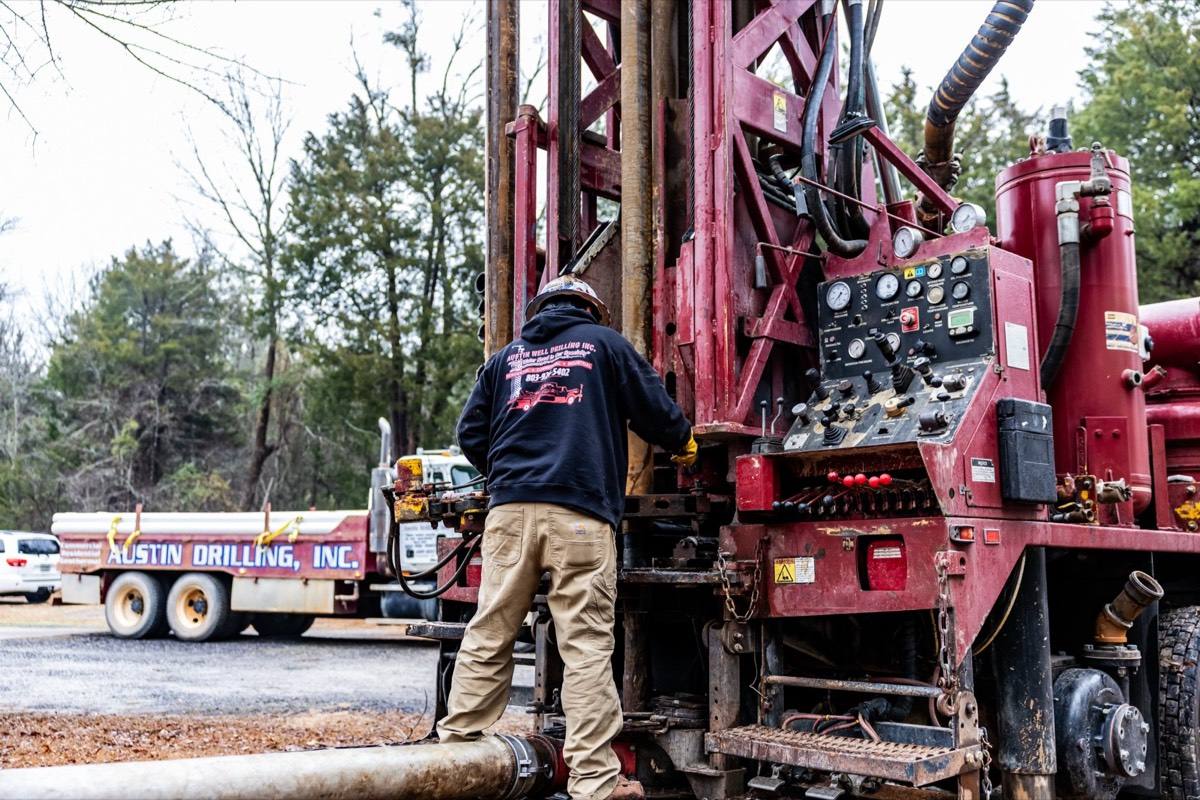
Dillon County Well Service
Dillon County Is Rural, Agricultural, and Almost Entirely Groundwater-Dependent.
Dillon County is one of the more sparsely populated counties in the state, sitting up against the North Carolina line along the Little Pee Dee. It is farming country, public water distribution covers a limited share of the land area, and for most properties out on the county roads groundwater is the whole supply — for the house, the livestock and the crop alike.
The compensating advantage is that the ground here is generous. Dillon County sits on the Black Creek and Middendorf sands, thick and continuous Coastal Plain aquifers that yield well and yield predictably. Screened, gravel-packed wells here can deliver serious volume, and the dry-hole risk that haunts hard-rock counties is essentially absent. If you need water for irrigation, this is good ground to be asking on.
The practical constraint is distance rather than geology. We are based in West Columbia and Dillon County is one of the longest runs we make, so we schedule work up here in blocks rather than treating it as same-day territory. We would rather say that plainly than imply a response time we cannot hold. For planned work — a new well, an irrigation system, a pump replacement you can see coming — that is rarely a problem. For a genuine emergency it is worth knowing before you need us.
Iron and hydrogen sulfide are the usual water-quality findings, and the deeper units carry the same sodium-bicarbonate character found across the Pee Dee. All of it is testable and treatable once measured.
Dillon, SC Services
Well, Farm & Water Services in Dillon County
Well Drilling
New household and agricultural wells on aquifers that genuinely support high volume.
Learn More →
Well Repair
Planned repairs and pump replacement, scheduled honestly around the distance involved.
Learn More →
Pump Services
Pump sizing for combined household, livestock and irrigation demand.
Learn More →
Water Treatment
Iron and sulfide are the routine findings. Free analysis before any equipment is proposed.
Learn More →
Irrigation Wells
Crop irrigation wells designed for sustained pumping rates, not peak-minute flow.
Learn More →
Septic Installation
Septic installation across a county where public sewer reaches very little.
Learn More →
Dillon Well Conditions
What to Expect When You Drill in Dillon
Dillon County has some of the more generous aquifers we drill into. The limiting factor here is scheduling distance, not the ground.
Ranges reflect typical conditions across Dillon County. Individual properties vary — we assess your specific site before quoting.
Common Questions
Dillon, SC Well FAQ
Serving Dillon, Latta, Lake View & Dillon County
Strong aquifers, honest scheduling. Call for a free assessment on planned work.